Lincoln MA Modernist Homes: A Smart Buyer’s Guide
April 23, 2026
April 23, 2026
If you are drawn to clean lines, glass-filled rooms, and houses that feel connected to the land, Lincoln deserves a close look. This town holds an unusually deep concentration of modernist and mid-century homes, which makes it one of the most distinctive home searches in Greater Boston. If you want to understand where to look, what design details matter, and what to watch for before you buy, this guide will help you approach the process with more confidence. Let’s dive in.
Lincoln is not a town with just a few interesting modern homes tucked away on side streets. According to Historic New England’s Gropius House overview, Lincoln is home to more than 300 modern-movement houses and more than sixty mid-century Modern structures, making it one of the most important places in New England for buyers who appreciate this architecture.
That story starts in a major way with Walter Gropius. Historic New England identifies the 1938 Gropius House in Lincoln as a National Historic Landmark, and it also notes that the nearby Woods End Road area includes Modern houses by Walter Gropius, Marcel Breuer, and Walter Bogner.
Lincoln’s setting is part of the appeal. The town is less than a half hour west of Boston and accessible by car or commuter rail, according to Historic New England, yet it also offers a landscape-centered experience that feels very different from a typical suburban search.
If you are specifically looking for a modernist or mid-century home in Lincoln, location matters more than many buyers realize. Some streets and areas are especially tied to the town’s Modern history and are useful starting points for your search.
The most relevant names to know, based on the town’s historic-district study report, include:
The town’s historic-district study report also notes that neighborhoods such as Beaver Pond Road, Old Concord Road, Woodcock Lane, Woods End Road, Rockwood Lane, Tabor Hill Road, Huckleberry Hill, Stonehedge, and Twin Pond Lane were originally exclusively or primarily Modern neighborhoods.
Among Lincoln’s best-known modern areas, Brown’s Wood stands out. The Lincoln Historical Society describes it as a planned community of twenty-three contemporary houses built in the early 1950s.
That matters because it shows how Lincoln’s modern architecture developed as a community pattern, not just as one-off custom homes. If you are hoping to find a property where the architecture, lot placement, and streetscape still reflect a cohesive original vision, areas like Brown’s Wood deserve special attention.
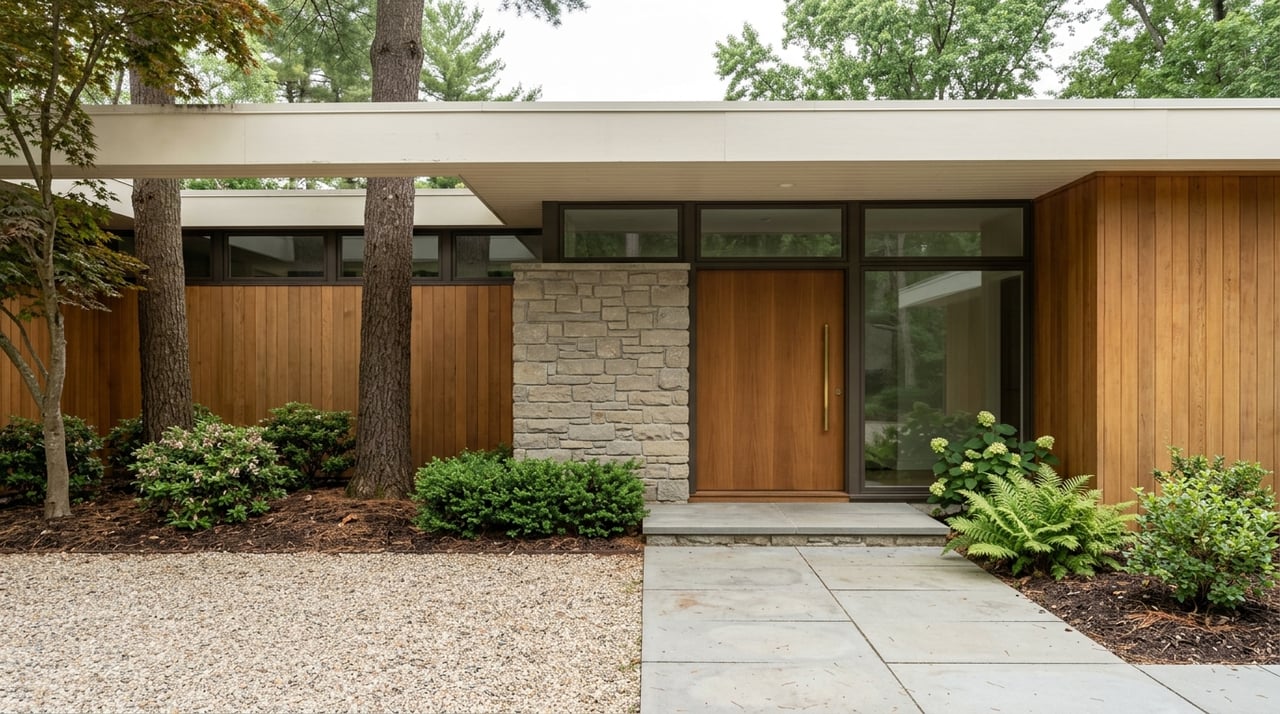
Many Lincoln modernist and mid-century homes share a clear design language. They often emphasize simplicity, efficiency, and a strong relationship between the house and its site rather than ornament or grand formal gestures.
Historic New England explains that the Gropius House blended traditional New England materials such as wood, brick, and fieldstone with modern materials like glass block, acoustical plaster, and chrome banisters. It also notes that both the house and grounds were planned for maximum efficiency and simplicity of design.
Lincoln’s local standards describe similar themes in Brown’s Wood and related districts. The town highlights low horizontal massing, flat or low-pitched roofs, large windows, minimal decorative elements, and siting that preserves woodland character and privacy, according to the town study report.
When you tour homes, these are some of the features worth noticing:
The town report also notes that more modest examples in Lincoln included Deck House and Acorn houses, which grew out of prefabricated ideas tied to Carl Koch’s Techbuilt concept. That means Lincoln’s modern inventory can include both architecturally significant custom homes and more approachable mid-century designs with strong original character.
In Lincoln, the land is often part of the architecture. The Lincoln Historical Society notes that almost 35% of the town, or about 5 square miles, is under permanent conservation deeds or restrictions, and the town has more than 80 miles of trails.
That conservation context helps explain why many buyers evaluate these homes differently than they would a standard suburban property. A modern house in Lincoln is often valued not only for its interior layout, but also for how it sits in the woods, how private the setting feels, and how well the original landscape concept still reads.
From a practical standpoint, this means cosmetic updates are not always the most important factor. Based on the town’s design standards, roofline, window rhythm, massing, and wooded siting often say more about authenticity than a renovated kitchen or bath.
When you are comparing homes, it helps to look beyond finishes. In Lincoln, a house may still feel very true to its origins even if the interiors have been updated over time.
On the other hand, poorly handled exterior changes can affect both character and future appeal. The town’s standards place clear importance on exterior form, landscape setting, and the connection between indoors and outdoors, as described in the historic-district study report.
A smart buyer will pay close attention to:
This is one of the most important parts of the process. Lincoln’s preservation and permitting framework can directly affect what you can change, how long approvals may take, and how much planning you should do before closing.
The town explains that the Historic District Commission reviews exterior alterations visible from a public way and demolitions in historic districts. Its application process requires items such as photographs, a site plan, plans, and material samples, and the bylaw says no building permit for covered exterior work is issued until the required certificate is in place.
The same town source notes that the process can take at least three months from application to recorded decision. That timeline can be very manageable if you plan ahead, but it is not something to discover after you have already designed a major addition.
For many buyers, this is reassuring. The town states that the Historic District Commission does not review interior arrangements or interior features that are not subject to public view.
At the same time, exterior changes can carry real review requirements. The district standards specifically address preserving modern character, woodland setting, and naturalized landscape, and they also allow review of energy-conserving or energy-producing devices such as solar or wind systems.
Before you make an offer on a Lincoln modern or mid-century home, confirm the property’s regulatory context early. This step can save time, money, and frustration later.
According to the town’s Historical Commission and Historic District information, properties may be affected by historic-district review, demolition delay, or neighborhood conservation district requirements. The town’s permitting guidance also warns that projects often require approvals from multiple boards and commissions.
The Zoning Board of Appeals notes that many hearings involve additions or renovations on non-conforming lots or homes that do not meet current setback rules, and its approval process generally takes a minimum of three months. If you are buying with future renovation plans in mind, you should evaluate permit complexity at the same time you evaluate price and condition.
Use this checklist before you move forward:
Lincoln remains a premium, relatively tight-inventory market. While different data sources use different methodologies and time periods, they point in the same general direction.
Zillow’s Lincoln home values page says Lincoln’s average home value was $1,501,967 as of March 31, 2026, with 14 homes for sale. The research report also notes that Realtor.com showed 13 homes for sale, a median sale price of $1,824,500, and a median 90 days on market in a December 2025 snapshot, while the Massachusetts Association of REALTORS’ January 2026 Lincoln single-family report showed a median sales price of $2,337,500, inventory of 9 homes, 1.9 months’ supply, and 95.8% of original list price received.
The takeaway is not that one number matters more than another. It is that Lincoln offers limited supply in a high-value market, and modernist homes are an even more specialized subset within that landscape.
If you are serious about buying a modernist or mid-century home in Lincoln, speed alone is not the answer. The better strategy is to be prepared, understand what drives long-term value, and evaluate each opportunity with a wider lens.
The best-preserved or best-sited homes may attract attention quickly, especially when they retain original massing, landscape integrity, and a clear path for thoughtful updates. In this market, you will want to assess design authenticity, setting, condition, and permit complexity together rather than treating these homes like standard suburban comparables.
A well-informed search can make all the difference. If you are considering a purchase in Lincoln and want a strategic, data-driven perspective on how to evaluate these distinctive homes, Denise Mosher can help you navigate the process with clarity and care.
Stay up to date on the latest real estate trends.