Comparing Sudbury New Construction Homes and Historic Homes
April 2, 2026
April 2, 2026
Choosing between a newly built home and a genuinely historic one in Sudbury is not just about taste. It is about how you want to live, what kind of upkeep you are prepared for, and how much flexibility you want when it comes to future updates. If you are weighing charm against convenience, this guide will help you compare both options through the lens of Sudbury’s housing stock, local rules, and long-term value. Let’s dive in.
Sudbury is a town where single-family living shapes the market. According to the town’s 2025 Housing Production Plan, 94% of its 6,323 housing units are single-family homes, and 92% are owner-occupied.
That matters because your choice is not between a small number of old homes and a few new ones. Sudbury has a wide spread of housing ages, from early historic properties to a much larger inventory built after World War II, when the town grew from a rural, farm-based community into the suburban market you see today.
In Sudbury, a home can look traditional without actually being historic. That distinction matters more than many buyers expect.
The town’s Historic Districts Commission says Sudbury has four historic districts: Town Center, Wayside Inn, King Philip, and George Pitts Tavern. The town’s historic inventory also identifies about 458 historic pre-1940 buildings, structures, and places, including 403 houses and 211 houses built before 1900.
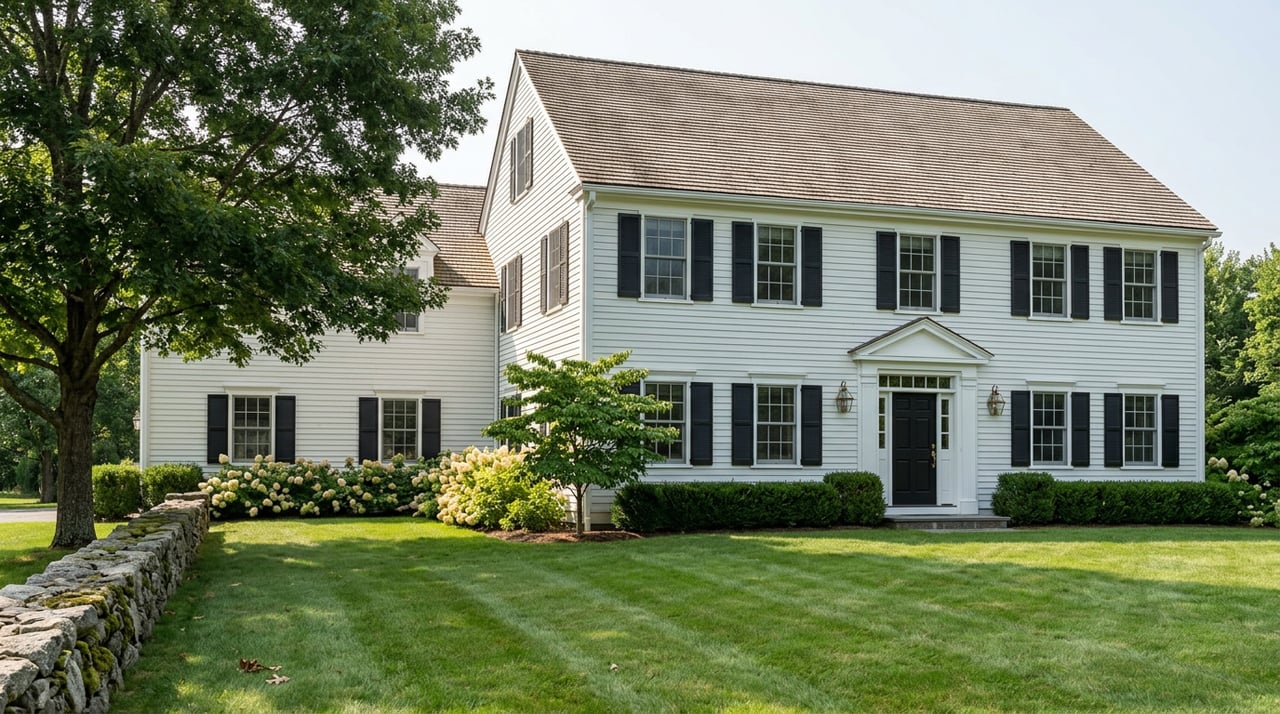
Architecturally, many of these homes reflect the broader New England colonial tradition. Historic New England’s style guide describes First Period homes as early wood-frame houses with steep roofs and vernacular details, Georgian homes as symmetrical and orderly, Federal homes as lighter and more refined, and Colonial Revival as a later interpretation of colonial design.
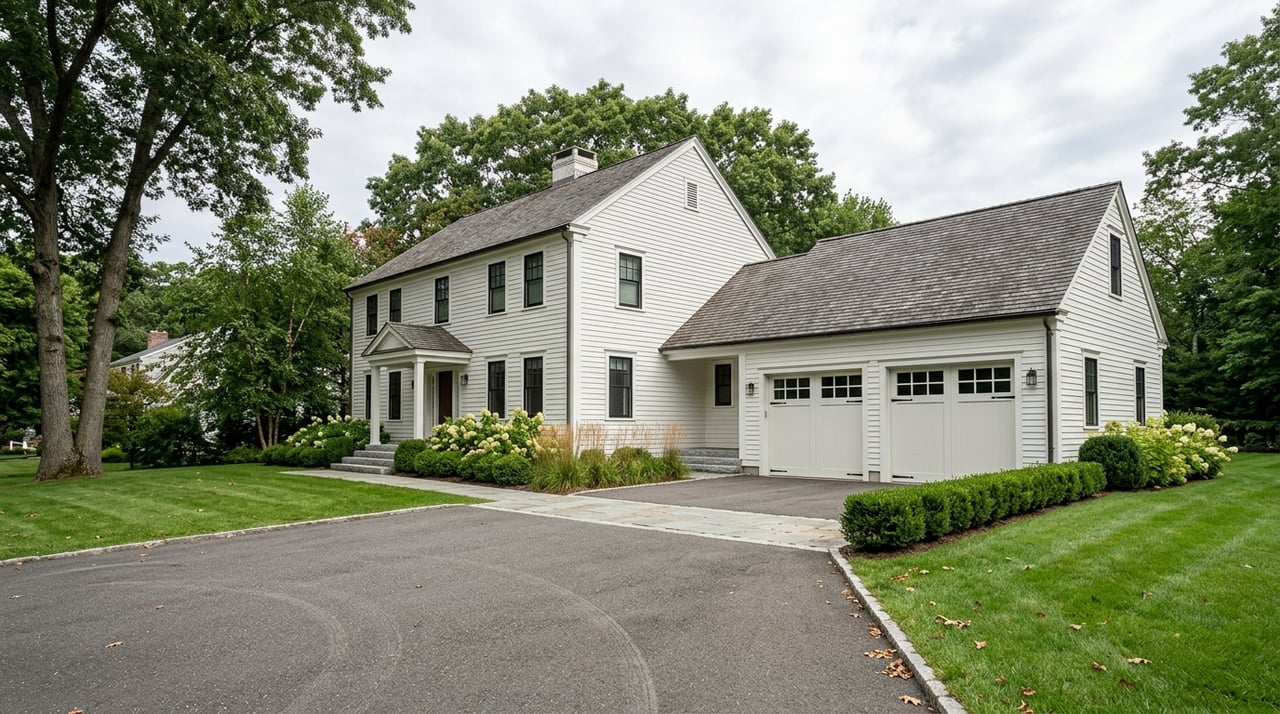
That last point is especially useful in Sudbury. A newly built home may borrow Colonial Revival cues and feel classic, while an older home may be genuinely historic with original proportions, materials, and details that newer construction only references.
New construction in Sudbury typically appeals to buyers who want modern systems, current building practices, and a clearer path to energy efficiency. While no two homes are identical, newer properties generally align more closely with today’s standards for insulation, air sealing, and overall performance.
Sudbury’s building code incorporates the Massachusetts Stretch Energy Code and Specialized Energy Code. The building department requires a residential energy-compliance worksheet for permit applications involving one- and two-family homes, townhouses, additions, and renovations.
The state explains that the Stretch Energy Code is designed to support more energy-efficient construction than the base code, while the Specialized Code is intended to keep new construction aligned with Massachusetts greenhouse-gas limits. The state’s technical guidance also notes that only new construction falls under the Specialized Code, while existing homes follow the Stretch Code.
For you as a buyer, that means newer homes often offer a more straightforward route to present-day efficiency expectations. In many cases, that can translate to easier day-to-day living and fewer immediate upgrade projects after closing.
Historic homes can deliver architectural detail and a sense of place that is difficult to replicate. Original millwork, antique framing, period proportions, and long-established settings are part of the appeal.
At the same time, older homes often come with more moving parts. Sudbury’s housing plan notes that older units may lack heating and energy efficiency, may not be code compliant, and may also have lead paint that can be costly to remediate.
The EPA’s lead-paint guidance reinforces that risk. The agency says the older the home, the more likely it is to contain lead-based paint, and 87% of homes built before 1940 have some lead-based paint. The EPA also advises assuming pre-1978 homes contain lead-based paint unless testing shows otherwise.
If you love older homes, none of this should scare you away. It simply means your due diligence needs to be more detailed, especially around systems, deferred maintenance, and the likely cost of future work.
One of the biggest practical differences between new construction and a historic home in Sudbury is what happens after you move in. If you plan to renovate, expand, or change exterior details, the approval path may look very different.
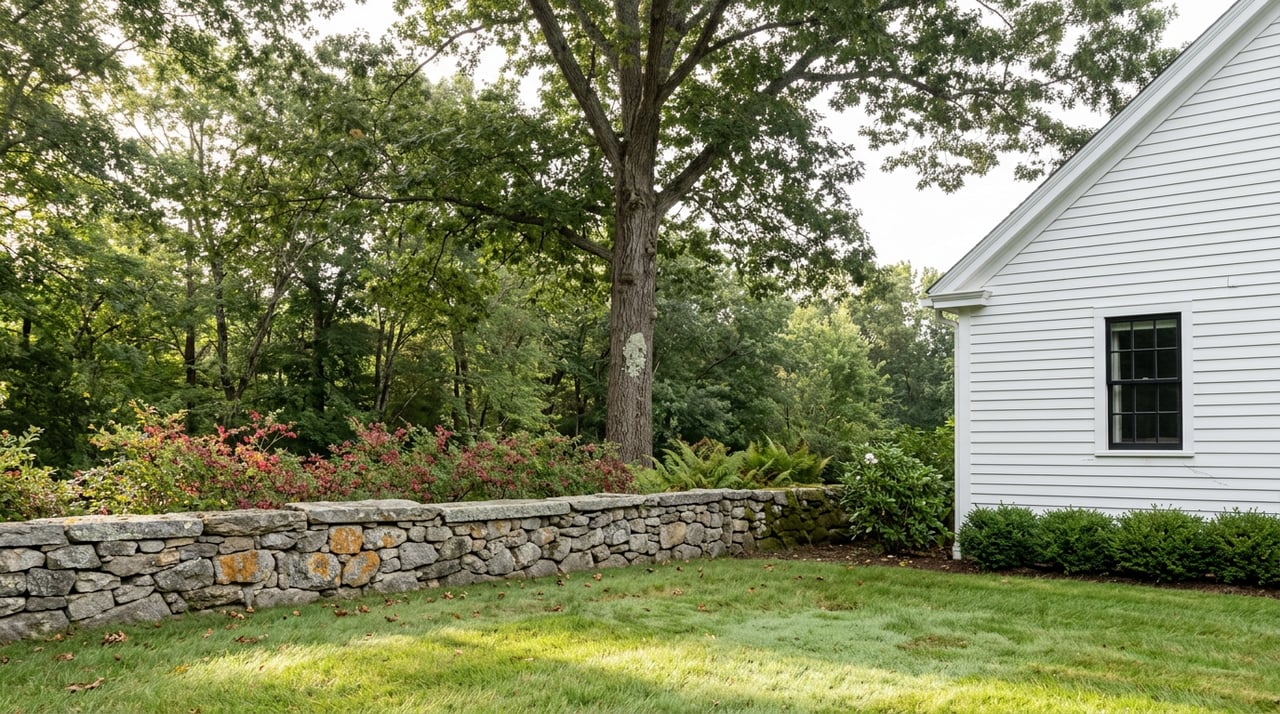
Within Sudbury’s historic districts, the Historic Districts Commission says exterior architectural and color features, landscaping, stone walls, and signs are controlled. Outside those districts, the town’s historic inventory notes that pre-1940 buildings can still be subject to a six-month demolition delay if they are deemed historically significant.
For buyers, this often means historic homes require more planning around design, finishes, timing, and expectations. By contrast, a newer home in a standard setting may offer more flexibility if your long-term plan includes exterior changes or major updates.
If energy performance is high on your priority list, new construction may feel like the easier answer. Still, older homes in Sudbury are not without options.
Mass Save says insulation and air sealing are among the most cost-effective home efficiency improvements and can lower heating and cooling costs by up to 15%. The program currently offers 75% to 100% off approved improvements, no-cost options for income-eligible residents, no-cost Home Energy Assessments, and 0% HEAT Loan financing up to $25,000 for qualified upgrades.
That does not erase the challenges of an older house, but it does mean there may be tools available if you are buying a home that needs efficiency work. In many cases, the real question is whether you want a move-in-ready solution or a property you can improve over time.
Price differences between new and historic homes in Sudbury are shaped by more than age. Lot value, house size, renovation scope, and market demand all play a role.
Sudbury’s 2025 Housing Production Plan, using 2022 ACS data, shows an overall median home value of $892,700. By age, the reported median values were $790,900 for homes built in 1939 or earlier, $598,500 for homes built in 1940 to 1949, and $1,139,200 for homes built in 1990 to 1999.
The same report also notes that some pre-1940 homes are high-value historic properties. In other words, older does not always mean less expensive, especially when architecture, land, and location come together in a compelling way.
Sudbury also tends to reward larger homes at resale. The housing plan says only 15% of single-family homes sold in 2023 were under 2,000 square feet, while 29% were 4,000 square feet or larger. It also points to expensive land, with a generic 40,000-square-foot lot ranging from $369,000 to $686,400 in FY2024.
That land math helps explain why newer homes often command strong pricing and why renovation budgets on older properties can escalate quickly. In Sudbury, part of what you are paying for is not just the structure itself, but the cost and scarcity of the land under it.
The right answer depends on what you value most in your daily life and long-term plans.
A new construction home may suit you best if you want:
A historic home may suit you best if you want:
Neither path is automatically better. In Sudbury, the smart choice is usually the one that fits your time, budget, risk tolerance, and vision for how you want to live in the home.
If you are serious about buying in Sudbury, compare homes with a framework instead of reacting to appearances alone. A handsome new colonial-style house may not offer the same experience as a true historic property, and a charming antique may require far more investment than its curb appeal suggests.
As you tour homes, focus on these questions:
A disciplined comparison can help you make a confident choice and avoid surprises after closing.
Whether you are drawn to the clean convenience of new construction or the depth and texture of a historic home, the best decision starts with careful local analysis. If you want experienced guidance on how Sudbury’s housing stock, pricing patterns, and property-specific tradeoffs line up with your goals, Denise Mosher can help you evaluate your options with clarity and discretion.
Stay up to date on the latest real estate trends.