Wellesley MA Home Styles: A Buyer’s Guide
June 25, 2026
June 25, 2026
If you are house hunting in Wellesley, the architecture is not just about curb appeal. In a town where detached single-family homes make up most of the housing stock, style often shapes your layout options, renovation plans, maintenance needs, and price point. If you understand the home styles you are most likely to see, you can make smarter decisions and avoid surprises. Let’s dive in.
Wellesley is overwhelmingly a single-family home market. Town planning materials show that 82.0% of dwelling units are detached, and Census QuickFacts report an 84.4% owner-occupied rate. That helps explain why buyers here often focus closely on lot, house style, age, and long-term usability.
The town’s history also plays a big role in what you see on the market today. Wellesley grew as a planned suburban community shaped by railroad stations, trolley lines, and early zoning, including the first town zoning law in the United States in 1914. As a result, the housing stock spans older village-era homes, early 20th-century revival styles, and many newer rebuilds.
For you as a buyer, that means two homes with similar square footage can offer very different living experiences. One may have historic character and tighter room layouts, while another may reflect a much newer floor plan and larger footprint. In Wellesley, style often tells you something about the era, the upkeep, and the likely project potential.
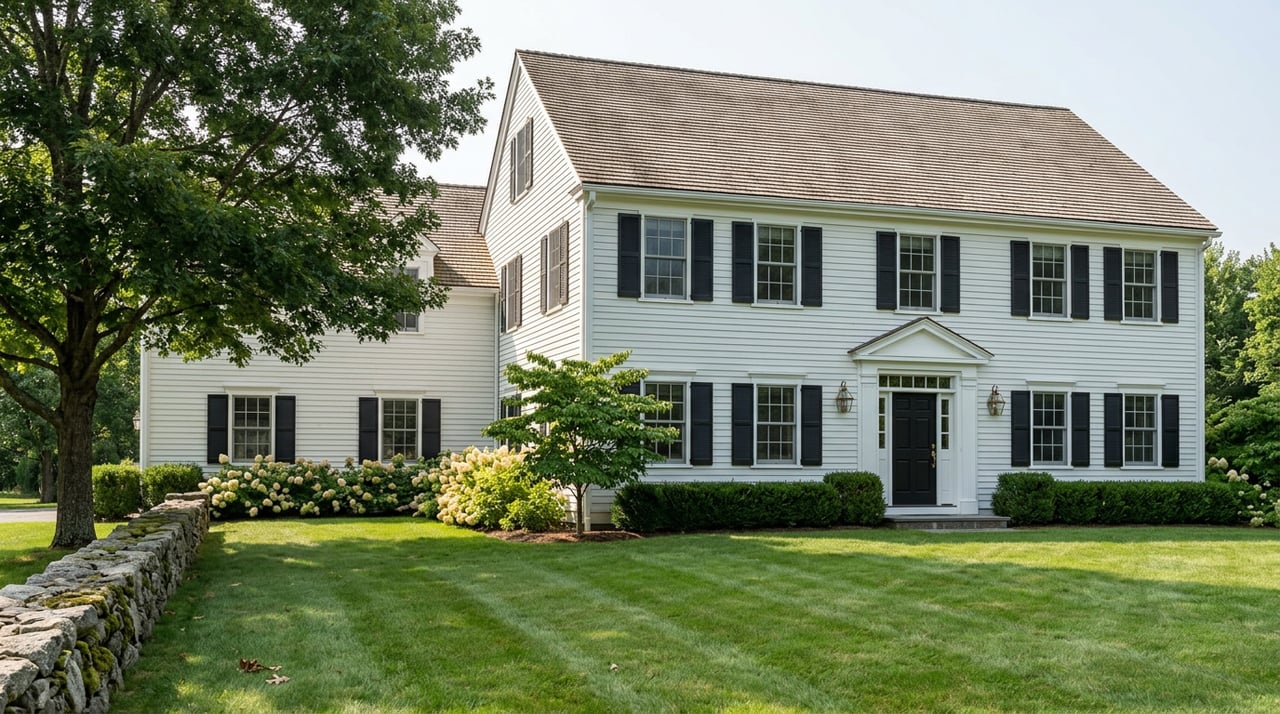
Colonial is by far the most common single-family style in Wellesley. Assessor data cited in the town’s 2025 Strategic Housing Plan show that Colonials account for 57% of single-family parcels overall. In the upper-value segment, that share rises to 83%.
That tells you something important about the local market. In Wellesley, the most common premium home is not necessarily the rarest or most ornate one. It is often a Colonial or Colonial Revival home with generous square footage, a balanced exterior, and a layout that fits modern living expectations.
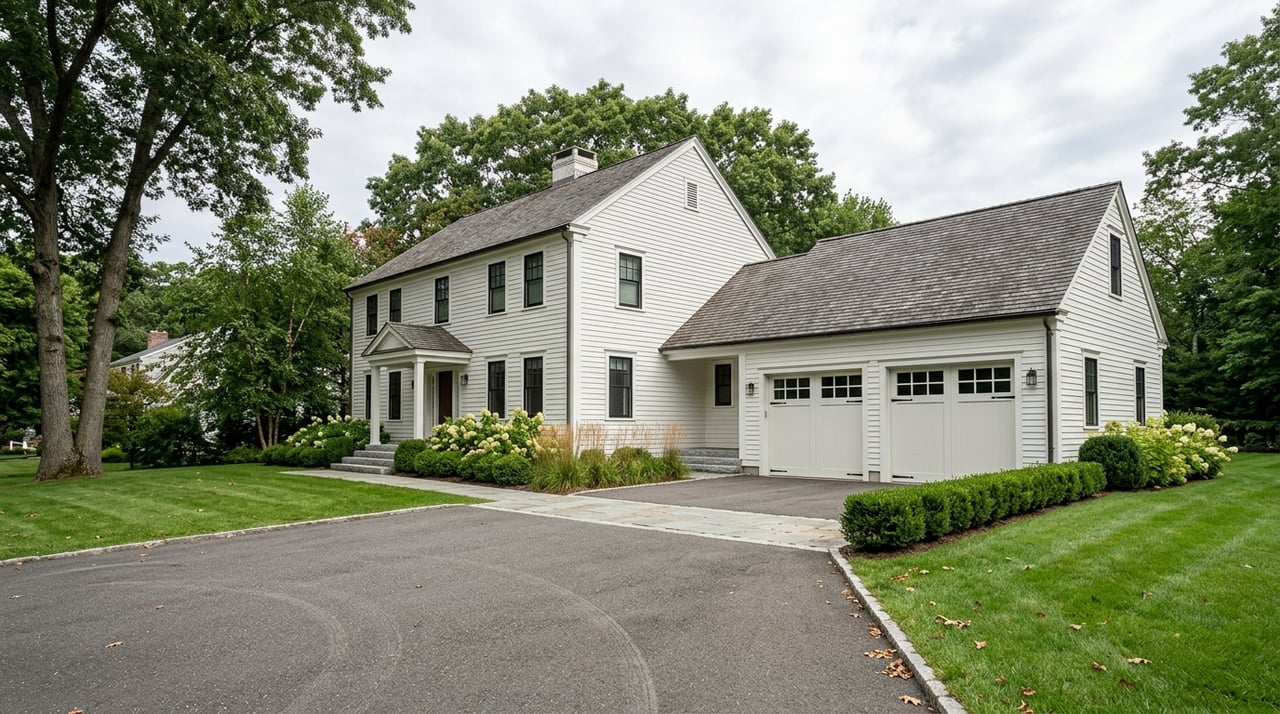
Colonial Revival homes are usually symmetrical and formal in appearance. The National Park Service describes them as featuring gabled or hipped roofs, prominent entrances or porches, and classical details such as columns, pilasters, fanlights, and Palladian windows.
In Wellesley, that architectural language appears in homes across different eras. The town identifies examples such as the Tufts House in Cliff Estates, the Fiske House after its 1937/38 transformation, and the 1942 Silvia Plath House. These examples help show how the style became part of Wellesley’s residential identity.
For many buyers, Colonial homes offer a familiar and practical structure. Their symmetry often translates into more formal room separation and a straightforward sense of flow. If you are thinking ahead to future changes, that can make additions or rear expansions easier to picture.
In Wellesley, though, design flexibility still has limits. The town’s Historic Preservation Design Guidelines say new construction should reflect surrounding facades, rooflines, fenestration, and proportions, especially in historic settings. So even when a Colonial seems easy to expand, local review standards can still shape what is realistic.
Not every Wellesley single-family home fits the larger Colonial mold. In the lower-value segment of the market, the housing stock tends to be older and smaller. The town’s plan places that segment at a median year built of 1937, with a median size of 1,692 square feet and a median lot size of about one-quarter acre.
In that part of the market, Colonial remains common, but Old Style and Cape Cod homes also appear more often. Garrison homes show up across the broader housing stock as well. If you are searching for an entry point into Wellesley’s single-family market, these are styles you are more likely to encounter.
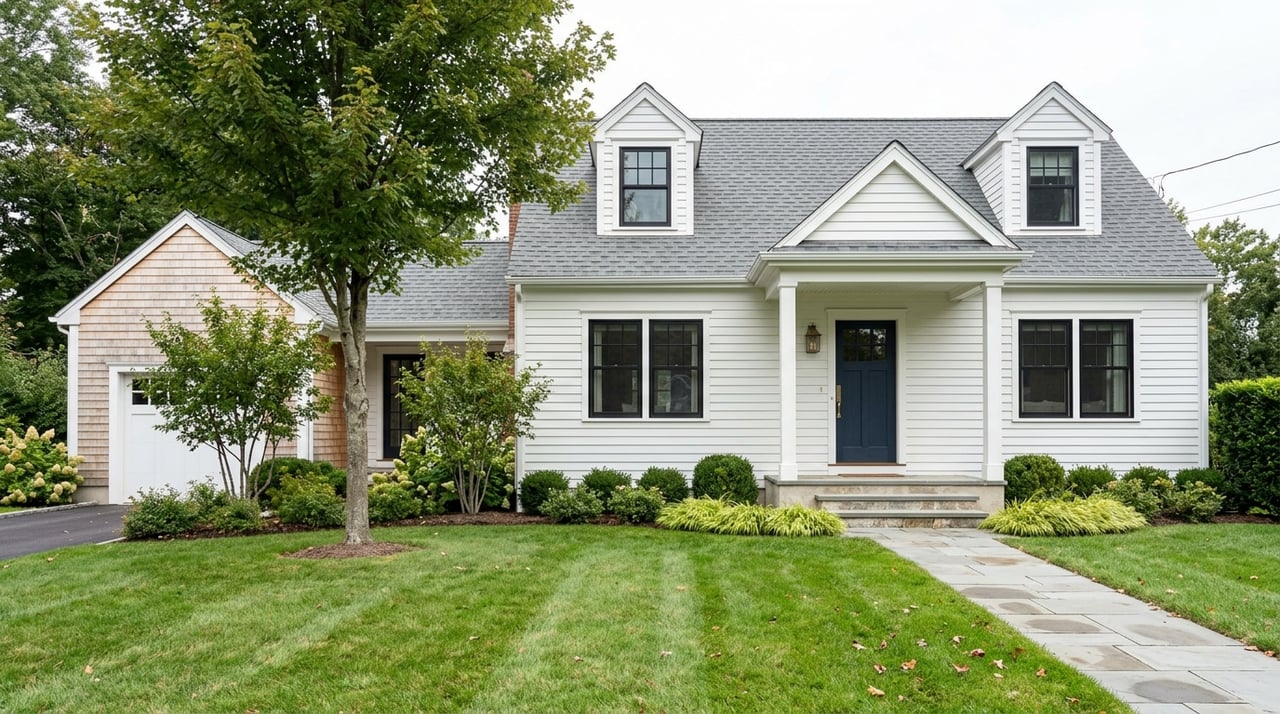
A Cape Cod house is typically a small one- or one-and-a-half-story home with a steep roof. That usually means a more compact footprint, simpler exterior form, and a layout that may feel efficient rather than expansive.
For some buyers, that is a plus. A smaller house can offer charm, manageable living space, and a chance to buy into Wellesley with a different cost profile than the town’s larger Colonials. For others, it may mean thinking carefully about future expansion and whether the existing layout will work long term.
In Wellesley, older vernacular or Old Style homes are often tied to earlier phases of the town’s development. These homes can vary more in form and room arrangement than standard Colonials. You may find irregular floor plans, additions from different eras, or exterior details that reflect incremental updates over time.
That variation can be appealing if you value individuality. It can also require more diligence during your home search, because homes in this category may differ widely in condition, systems, and renovation history.
Tudor homes are a smaller part of Wellesley’s single-family inventory, but they remain part of the high-end mix. The town’s 2025 plan lists Tudor at 3% of the upper-quartile style mix. While that is a modest share, it is still enough to matter if you are looking for architectural character.
Britannica describes Tudor style as featuring half-timbering, complex roofs with many gables, bay windows, and prominent chimneys. In practical terms, Tudor homes often stand apart from Wellesley’s more common Colonial inventory because they feel more detail-rich and visually distinctive.
A Tudor can offer strong curb presence and a memorable sense of craftsmanship. If you are drawn to homes with texture and architectural personality, this style may stand out quickly during your search.
At the same time, older detail-heavy homes often call for more careful upkeep. Rooflines, chimneys, windows, and original exterior materials can become important cost areas over time. In a market like Wellesley, those details matter not just for maintenance but also for how future exterior work may be reviewed.
One of the most important things to understand about Wellesley is that many newer homes are rebuilds. The town reports that from 2003 to 2025, the single-family stock increased by only 95 homes, even though more than 1,200 single-family homes were built during that period. That strongly points to teardown and rebuild activity rather than large net-new growth.
This pattern helps explain why Wellesley can feel both historic and newly built at the same time. You may see a street with older homes, renovated homes, and substantial new construction side by side. The market is often less about expansion into new areas and more about reinvestment in existing neighborhoods.
The upper-value segment in the town’s housing data has a median year built of 1991 and a median finished area of 4,544 square feet. That compares with 1937 and 1,692 square feet in the lower-value segment. In simple terms, newer and more expensive homes in Wellesley are usually much larger.
For you, that often means more open layouts, larger kitchens, bigger primary suites, and more finished living area. It may also mean a very different cost structure than an older Cape or Old Style home, even if both sit on similar streets or lots.
In Wellesley, home style is not just an aesthetic issue. It can affect what happens when you want to renovate, expand, or rebuild. That is especially true for older homes and homes in designated historic settings.
The Historic District Commission reviews exterior changes for the 65 properties in the Cottage Street Historic District and for five single-building historic districts. The Demolition Review Bylaw also applies to dwellings built on or before December 31, 1949. In addition, the town’s Historic Preservation Design Guidelines apply to older residences outside designated districts.
If you are considering a home because you plan to add on later, local review should be part of your due diligence from the start. A home’s age, location, and architectural character can all influence what approvals may be needed.
Wellesley also has a Large House Review process that can apply to new homes and additions when total living area plus garage space exceeds the zoning threshold. The town says this process typically takes three to four months and includes review through the Planning Board, Design Review Board, and Engineering Division. For buyers with renovation goals, that timeline is worth building into your plans.
Wellesley is a high-price, low-supply single-family market, and home style often overlaps with size, age, and value. Town planning materials show an overall median assessed value of $1.656 million for single-family homes. The lower-value quartile stood at $1.282 million, while the upper-value quartile reached $2.2115 million.
The town’s 2024 market summary reported a median single-family sale price of $2.1035 million. While list prices, assessed values, and closed sale prices are not interchangeable, the broader pattern is clear. Wellesley buyers are often choosing among very different price tiers that reflect different eras of housing stock.
If you are shopping at the premium end, you are most likely to encounter larger Colonials and newer rebuilds. If you are looking for a smaller single-family option, you are more likely to see older Colonials, Cape Cod homes, Old Style houses, and other mixed vernacular homes.
That does not just change the look of the home. It also changes your likely maintenance profile, renovation flexibility, and project timeline. In Wellesley, style is often a shortcut to understanding how a home may live now and what it may require later.
When you walk into a home in Wellesley, it helps to look beyond finishes and staging. Try to read the home through the lens of style, age, and long-term fit. That gives you a more complete picture of value.
A few smart questions can help:
The more clearly you can answer those questions, the more confident your decision will be. In a market as nuanced as Wellesley, that kind of preparation matters.
Whether you are comparing a classic Colonial, a smaller Cape, or a detail-rich Tudor, the right choice depends on how you want to live now and what you may want the property to become later. If you want a thoughtful, data-driven perspective on Wellesley’s single-family market, Denise Mosher can help you evaluate style, value, and long-term opportunity with clarity.
Stay up to date on the latest real estate trends.