Sewer or Septic: The Question That Actually Decides Your Wayland Closing Timeline
September 3, 2026
September 3, 2026
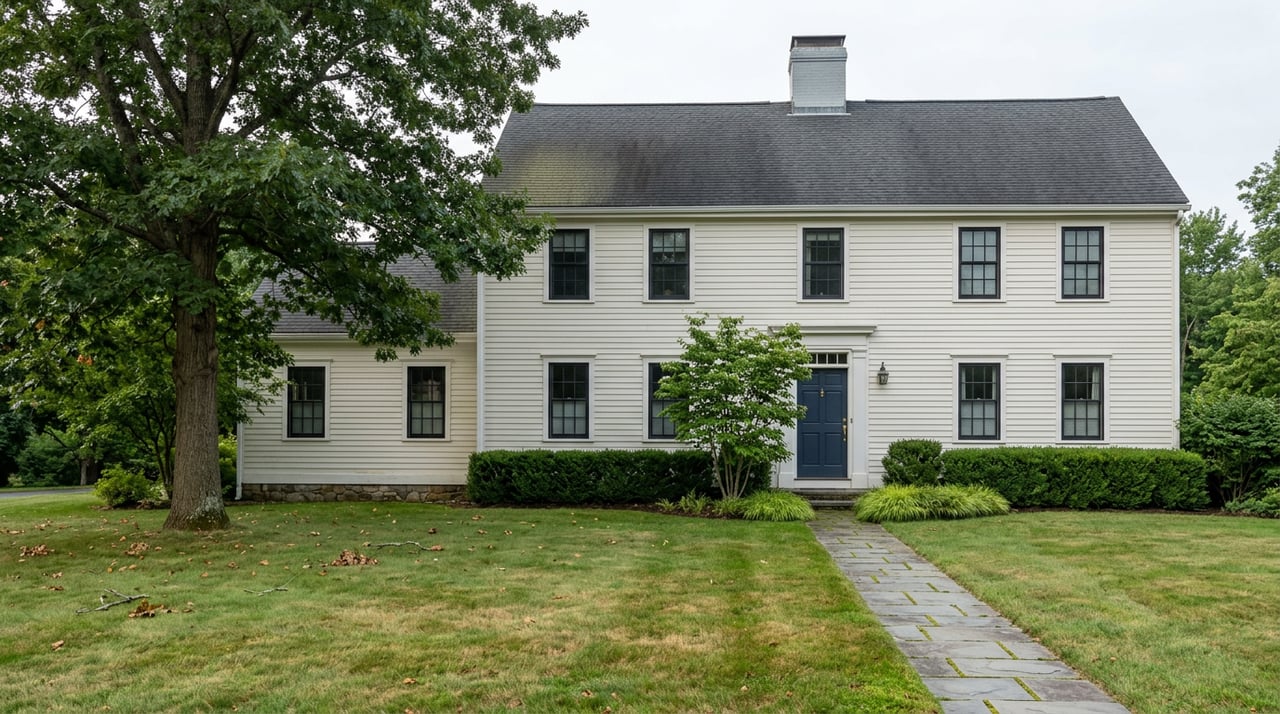
A Wayland seller lists a well-kept colonial on a quiet cul-de-sac, prices it in line with recent comparable sales, and expects the kind of fast, competitive process the town has become known for. Three offers come in in under three weeks. Then the buyer's attorney asks a question the seller hasn't thought about since the home inspection they did as a buyer years ago: when was the septic system last inspected, and does the Title V certificate still have time left on it?
That single question can add weeks to a closing that otherwise would have moved in under a month. It has nothing to do with price, staging, or how many offers came in. It has everything to do with where the house sits relative to a line most Wayland residents have never had reason to trace.
Wayland's housing market has been moving quickly. Over the three months ending in May 2026, homes sold for a median price of $1.2 million, up close to 29 percent from the same period a year earlier, with buyers averaging around three offers per listing and deals closing in about 18 days. Those numbers describe a seller's market in almost every meaningful sense.
What they don't describe is that two homes selling for the same price, on the same street, can be on entirely different regulatory tracks before they ever get to closing. One factor drives that split more than any other in this town: whether the property sits on municipal sewer or relies on a private septic system.
Wayland does not have town-wide public sewer. The only part of town connected to a municipal wastewater treatment plant is the Town Center and Route 20 corridor, served by a plant that the town's Wastewater Management District Commission has operated and financed since 1997. The commission's own description of its work notes that the plant has needed upgrades to handle increased flow from the Town Center development, tighter effluent limits set by the state, and the simple fact that the plant is aging.
Everywhere else in Wayland, a home relies on a private, on-site septic system. That is not a footnote buried in a listing sheet. It is the reason a Title V inspection, governed by the state's Title 5 regulations, becomes a mandatory step in almost every Wayland sale that isn't inside that sewered corridor.
A Title V inspection has to happen before a septic-served home can close, and the certificate has a shelf life. A passing inspection is valid for two years. If the seller has documented annual pumping on or before the inspection's anniversary date each year, that validity extends to three years. An inspector issues one of three outcomes:
None of this shows up in listing photos. It shows up in the contract, usually after an offer has already been accepted, which is exactly when a seller has the least appetite for a surprise.
A conditional pass is usually a manageable expense, often in the range of $1,000 to $5,000 depending on what needs fixing. A full failure is a different conversation. Replacing a septic system in Massachusetts can run anywhere from $15,000 to $50,000 or more, depending on the system design and the soil conditions on the lot.
When a system fails close to a closing date, sellers generally have two options. The preferred route, and the one most lenders want to see, is completing the repair or replacement before closing with a full sign-off from the local Board of Health. The alternative is an escrow holdback, where funds are set aside at closing to cover the work afterward. That option sounds convenient until you learn that some lenders simply won't allow it, which can turn a holdback plan into a renegotiation at the worst possible moment in a transaction.
| Town Center / sewered corridor | Rest of Wayland (septic) | |
|---|---|---|
| Inspection required before sale | No Title V required | Title V mandatory, valid 2-3 years |
| Typical pre-closing surprise | Rare | Conditional pass repair or full failure |
| Cost range if system needs work | N/A | $1,000-$5,000 (repair) to $15,000-$50,000+ (replacement) |
| Closing flexibility if issue found | N/A | Fix before closing, or negotiate escrow holdback if lender allows |
These aren't theoretical scenarios. Wayland's Conservation Commission has been actively reviewing septic-related filings this year in exactly the parts of town where private systems are the norm. In April 2026, the commission took up a proposal at 123 Dudley Road for a new single-family home, septic system, and stormwater management system sited within 100 feet of Dudley Pond, a filing that required wetlands review before the project could move forward. The same meeting addressed a septic system repair at 251 Commonwealth Road, located within 100 feet of bordering vegetated wetlands, where the applicant's engineer presented a revised replacement plan addressing landscaping and tree placement around the new system.
Both cases involve ordinary residential properties, not commercial development. Both required sign-off from a town board before the septic work could proceed. That is the kind of timeline friction that never shows up in a median price or a days-on-market statistic, and it is specific to the septic side of Wayland's infrastructure line.
The absence of town-wide sewer isn't just a plumbing detail. It has shaped the physical character of Wayland outside the Town Center corridor for decades. Areas without access to municipal wastewater treatment generally require larger lots to accommodate a septic system's leach field, which is part of why septic-served neighborhoods in Wayland tend toward more space between homes and a more open, semi-rural feel compared to the denser Town Center area.
That connects directly back to the transaction question. A buyer drawn to Wayland for a bigger lot and more separation from neighbors is very likely buying into the septic side of town, and should expect the Title V process as part of that trade-off from the start, not as a surprise mid-contract.
If your Wayland home relies on a septic system, the sequence that protects your timeline and your net proceeds looks like this:
None of these steps change your list price. They change whether your 18-day market turns into an 18-day market with a clean close, or a 45-day slog over a distribution box.
Does my home in the Town Center area need a Title V inspection at all? If your property is connected to the municipal wastewater treatment plant that serves the Town Center and Route 20 corridor, you are not required to complete a Title V inspection before selling. Confirming your connection status early avoids any confusion once you're under contract.
How far in advance should I schedule my Title V inspection? Given the two to three year validity window and the possibility of a conditional pass requiring repair work, scheduling an inspection several months before you plan to list gives you time to address anything that comes up without it becoming a closing contingency.
What happens if my septic system fails right before closing? You and the buyer have two realistic paths: complete the repair or replacement before closing with Board of Health sign-off, which most lenders prefer, or negotiate an escrow holdback, which depends entirely on whether the buyer's lender allows it. Knowing which path your buyer's financing supports before you're mid-negotiation is worth confirming early.
Wayland's market rewards sellers who understand these mechanics before they list, not after an offer is already on the table. If you're weighing a sale and want a clear read on where your property sits relative to Wayland's sewer line, what that means for your timeline, and how to price and prepare with that reality in mind, Denise Mosher offers a complimentary home valuation built on exactly this kind of local, transaction-level detail.
Stay up to date on the latest real estate trends.