Who Makes the Snow at the Weston Ski Track, and Who Pays for It
November 12, 2026
This fall the Massachusetts Department of Conservation and Recreation put the Weston Ski Track up for competitive bid. The winning proposer is the operator that was already there. In its RFP announcement for DCR 2026-800, DCR names Charles River Recreation, Inc. as the winner of the contract to manage the Nordic ski facility, instruction and equipment shop at the Leo J. Martin Golf Course. The Friends of Leo J. Martin Skiing already describe Charles River Recreation as the group that runs the track's rentals, lessons and ski shop alongside DCR.
So the faces at the rental counter on Park Road should stay the same. The bigger change is that the request for proposals spells out who runs the snow guns, who fixes them and who pays when a repair gets expensive. Each winter at the track depends on that split.
DCR issued the request on September 11, 2026, amended it on September 25, and set the deadline for proposals at 4 p.m. on October 15. The RFP document covers the whole winter operation at 190 Park Road: trails, snowmaking, grooming, instruction, rentals, retail and events. It also sets out a "strict dual-use mandate." The operator has to protect the golf course turf, irrigation lines, fairways and drainage beneath the snow, because the same 18 holes reopen for golf when the season ends.
The RFP's proposal form asked bidders to price Winter Season 2027, with 2028 and 2029 listed as DCR option-year extensions. The draft permit in the RFP lets the Commissioner of DCR renew for up to two one-year extensions. Bidders could offer the state a guaranteed annual payment, a percentage of gross revenue, or both, and the draft permit sets each season's fee due by March 1. The operator earns its money from lessons, equipment rentals, the pro shop and approved concessions.
The RFP divides the work into fairly specific pieces, and it helps to see them side by side.
| Piece of the operation | Operator's role under the RFP | DCR's role |
|---|---|---|
| Land, facilities, snowmaking system | Operates the system day to day | Owns it, approves changes and major purchases |
| Snowmaking utilities | Not assigned | Pays them |
| Snowmaking crew and setup | Staffing, production, setup, monitoring, winterization, takedown | Approves dates and procedures |
| Hydrants, pipes, valves, pumphouse, snow guns | All routine labor, plus parts and outside repairs up to $20,000 per season | Parts and outside repairs above $20,000, and capital replacement, subject to funding |
| Trail grooming | Trained operators, plus its own snowmobile | Fuel, and repairs to its own grooming equipment |
| Rentals, lessons, shop, passes | Staffs and runs them | Oversight |
The RFP also requires a qualified Nordic manager on duty whenever the track is open. It says plainly that DCR personnel "are not a substitute for Permittee operating staff." Under those terms, a crew working nights to make snow on a cold December evening is the operator's crew, running state-owned equipment on state-paid power.
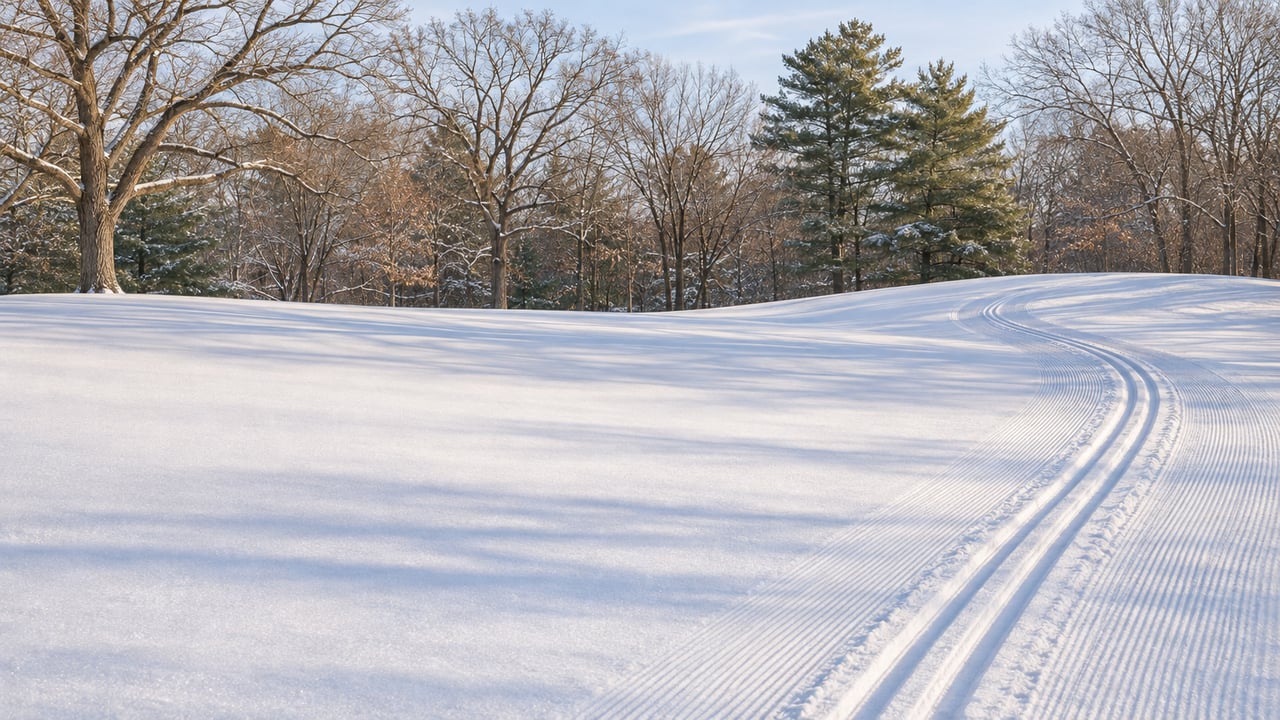
Snowmaking is what sets this track apart. The Friends of Leo J. Martin call it the only cross-country facility within 15 miles of Boston with both snowmaking and night skiing. Snowmaking covers 2.5 km of trail, and the network grows to as much as 15 km when there is enough natural snow. In a thin-snow winter, those 2.5 km are the whole ski track.
That is why the repair threshold matters. Under the RFP, the operator pays for parts, materials and specialist repairs on the snowmaking system until those costs reach a combined $20,000 for the season. After that, DCR covers them, "subject to funding availability," and DCR alone is responsible for capital replacement. The operator still owes all the ordinary labor after the threshold is passed. Routine breakdowns can be fixed on the operator's schedule. A failed pump or a worn-out set of guns becomes a state budget matter.
The community has helped with that before. On their snow-gun campaign page, the Friends of Leo J. Martin say their January 2023 campaign raised more than $20,000 for new snow guns, and that they were working with DCR on the purchase. The group is volunteer-run, and it says donations go toward the site's infrastructure, operations and access programs. So three parties pay into the equipment that makes snow on Park Road: the operator, the state and a nonprofit of skiers.
DCR, the operator and the clubs each sell different things, so a first visit can mean going to more than one website.
The RFP lists these operating hours: Monday through Thursday, 10 a.m. to 9 p.m.; Friday, 10 a.m. to 8 p.m.; Saturday, Sunday and holidays, 9 a.m. to 6 p.m. DCR can adjust them for high school races and team practices. The lit trails are why those weekday evening hours exist.
Keeping the same operator matters most because so much of the winter calendar was scheduled before the contract was decided. Every date below assumes the snowmaking system starts on time.
The Race for Snow fits the arrangement well. Its 5:15 p.m. start for children depends on the lights, and the race itself depends on snow that the operator's crew makes with state-owned guns and state-paid power. The Friends say the track is also home to clubs for youth, juniors, masters, skiers with disabilities, veterans and competitive racers. Each of those groups skis on the 2.5 km of snowmaking trail when natural snow runs short.
At Denise Mosher, we follow Weston's public places as closely as its home sales, because places like the ski track are part of what a Weston address is worth. If you're thinking about selling a home near Park Road or anywhere else in town this winter, we'd be glad to put real numbers to it. Request a Complimentary Home Valuation.
Stay up to date on the latest real estate trends.